Bunions & Hammertoes in New Canaan, CT
What Are Bunions and Hammertoes?
Bunions and hammertoes are two of the most common toe conditions we treat at New Canaan Podiatry, a bunion is a bony bump that forms at the base of the big toe as the joint shifts out of alignment, while a hammertoe is an abnormal downward bend at the middle joint of a smaller toe. Both tend to worsen without treatment, and both respond best when caught early. Dr. Jennifer Tauber, DPM, offers conservative-first treatment plans for each, with surgical referral when needed.
Call (203) 548-7688 or book online to get evaluated.
Why These Conditions Develop
Bunions and hammertoes have different mechanics, but they share a lot of the same root causes, which is part of why patients often deal with both at once.

Bunions
Bunions form when the big toe joint becomes unstable, usually because of inherited foot structure. Repeated pressure from narrow, pointed, or high-heeled shoes pushes the big toe toward the second toe, and over time the joint itself changes shape, producing the bony bump. Other contributing factors include:
- Hereditary foot structure with naturally unstable toe joints
- Arthritis, particularly rheumatoid arthritis
- Neuromuscular conditions affecting foot mechanics
- Prior foot injuries
- Long-term wear of poorly fitting footwear
Hammertoes
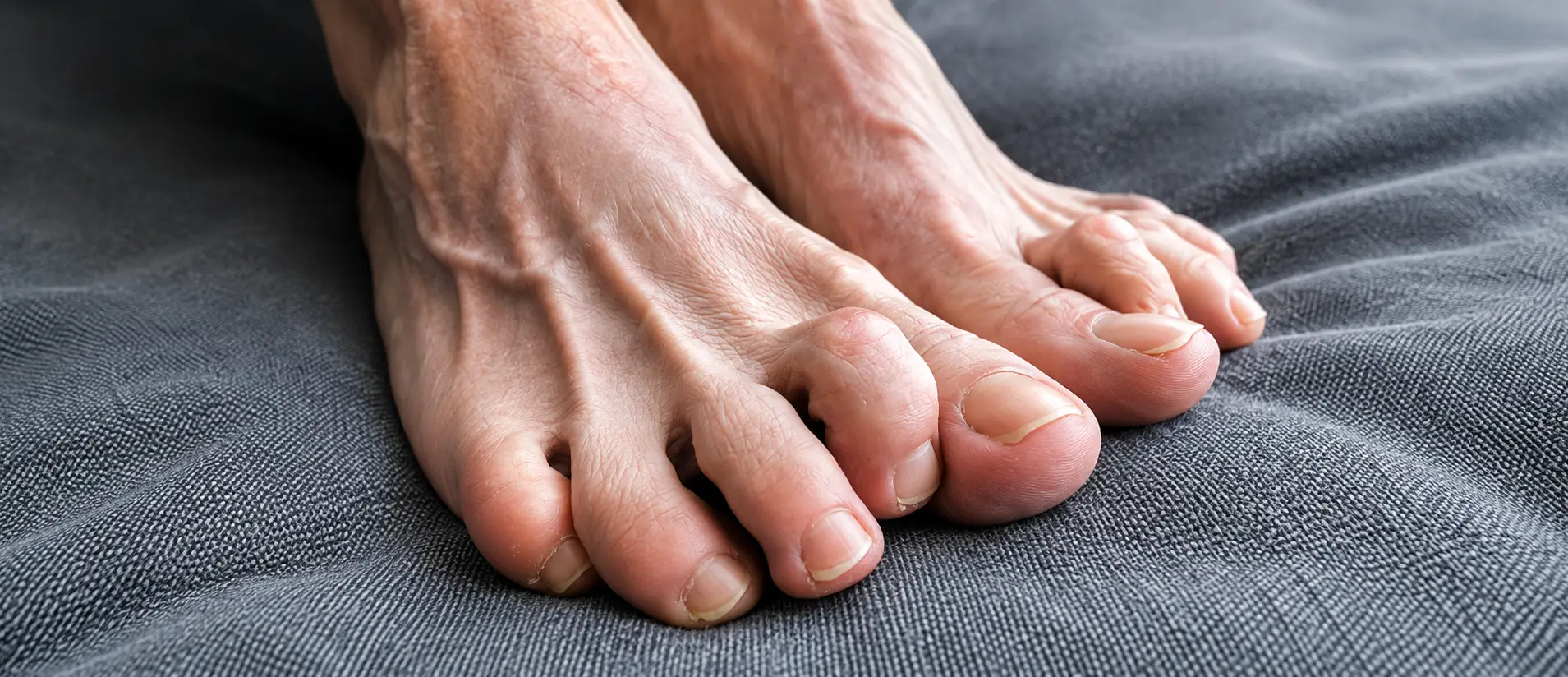
Hammertoes develop when the muscles, tendons, or ligaments that normally keep a toe straight fall out of balance, forcing the toe to bend at the middle joint. Common contributors include:
- Ill-fitting shoes, especially narrow, short, or high-heeled styles
- A second toe that's longer than the big toe, which increases susceptibility
- Flat feet or high arches, which alter tendon mechanics
- A prior stubbed or broken toe
- Age-related changes in joints and tendons
- Arthritis affecting toe alignment
Hammertoes are classified as either flexible, meaning the toe can still be manually straightened, or rigid, meaning the joint has stiffened in the bent position. Flexible hammertoes are considerably easier to treat, which is exactly why early evaluation matters.
Symptoms to Watch For
- Bunion Symptoms
Bunion Symptoms often build gradually and can include:
- Pain and tenderness at the base of the big toe
- Redness, warmth, and inflammation around the joint
- Corns and calluses where toes overlap
- Stiffness or restricted motion in the toe joint
- Trouble fitting into standard shoes
- Hammertoe Symptoms
Hammertoe Symptoms typically include:
- A visible downward bend or curl in one or more toes
- Pain and irritation from shoe friction
- Corns or calluses on top of the bent join
- Calluses on the ball of the foot beneath the affected toe
- Chronic pain and walking difficulty in later stages
Left untreated, either condition can change the way you walk, which can eventually contribute to knee, hip, or lower back pain as your gait compensates. Worth scheduling an evaluation as soon as either starts causing discomfort, rather than waiting for it to progress.
Treatment Options
r. Tauber starts with the least invasive option that makes sense for your specific condition and escalates only if conservative care isn’t enough.
Bunions
For bunions, that may include:
- Custom orthotics to correct alignment and relieve pressure
- Wide, accommodating footwear to reduce friction on the joint
- Splinting, taping, and padding to realign the toe and cushion it
- Anti-inflammatory medication for pain and swelling
- Corticosteroid injections for targeted inflammation relief
- Supartz hyaluronic acid injections to lubricate and cushion the joint
- MLS Laser Therapy to reduce inflammation and speed tissue healing
Hammertoes
For hammertoes, that may include:
- Roomier shoes with a wider, deeper toe box
- Custom orthotics to address the underlying biomechanical imbalance
- Padding and cushioning to protect corns and calluses from friction
- Splinting or taping to hold the toe in a corrected position
- Strengthening exercises to rebalance muscle and tendon function
- Anti-inflammatory medication for pain and swelling
Surgery
Surgery becomes the right conversation when conservative care isn’t holding the line or the condition is severe. For bunions, that typically means a bunionectomy to realign the joint and remove damaged tissue. For rigid or severely painful hammertoes, it usually involves releasing the contracted tendon or, when needed, removing a small section of bone to straighten the toe. Dr. Tauber will discuss your options thoroughly, including what surgical correction would involve and what to expect from recovery, so you can make an informed decision about next steps.
Ready To Visit New Canaan Podiatry?
Request an AppointmentYour Questions, Answered
New Canaan Podiatry provides comprehensive bunion and hammertoe treatment for patients in New Canaan, Darien, Stamford, Norwalk, Greenwich, Wilton, and the surrounding Fairfield County communities.
Call (203) 548-7688 or request an appointment online.
Will a bunion or hammertoe go away on its own?
No, neither one resolves without treatment. Both are structural and tend to progress over time. Conservative care can slow that progression and manage symptoms, but surgery is the only option that permanently corrects the condition once it’s set in.
When should I actually see a podiatrist about this?
Any time a bunion or hammertoe is causing pain, changing how you walk, or making it hard to wear normal shoes. For hammertoes specifically, catching it while it’s still flexible makes a real difference, since a rigid hammertoe usually does need surgery.
Will I need surgery?
Not necessarily, for either condition. A lot of patients get meaningful relief from custom orthotics, better footwear, padding, and the other conservative options above. Surgery tends to come into play when conservative care has been tried and hasn’t been enough, or when the condition is already severe.
What shoes should I be wearing?
For both conditions, a wide, deep toe box makes the biggest difference. Skip pointed shoes and high heels, and if you can find shoes with adjustable lacing or straps, that gives you more control over the fit as swelling or discomfort changes day to day.
How long is recovery if I do need surgery?
For bunion surgery, most patients are walking in a protective boot within a few weeks, with full recovery, including a return to regular shoes and activity, typically taking 6 to 12 weeks. Hammertoe surgery tends to have a shorter timeline, most patients can bear weight in a surgical shoe shortly after the procedure, with full recovery around 4 to 8 weeks. Exact recovery time depends on the specific procedure and technique used, and Dr. Tauber will walk you through what to expect for your case.
Can these come back after surgery?
Recurrence is possible but relatively uncommon with modern surgical techniques, especially when you follow post-op instructions and continue wearing appropriate footwear and orthotics afterward.
Are custom orthotics actually effective?
Yes, for both conditions. Orthotics correct the underlying biomechanical issues driving the condition in the first place, redistributing pressure across the foot and reducing strain on the affected joint, which provides real pain relief for a lot of patients even before surgery is on the table.
Can children get these conditions?
Bunions and hammertoes are both far more common in adults, but children can develop either one, particularly with certain inherited foot structures. If you notice an unusual bend or bump forming in your child’s toes, it’s worth having Dr. Tauber take a look.
Does insurance cover treatment?
Many plans cover medically necessary treatment for both conditions. Coverage for surgery depends on severity and your specific plan. Call us at (203) 548-7688 or check our insurance page, and our office can walk you through your benefits.
Trusted by Patients
Why Patients Choose New Canaan Podiatry
Whether you’re seeking relief from pain, recovering from an injury, managing a chronic condition, or simply looking to stay active and healthy, our team is here to help.