
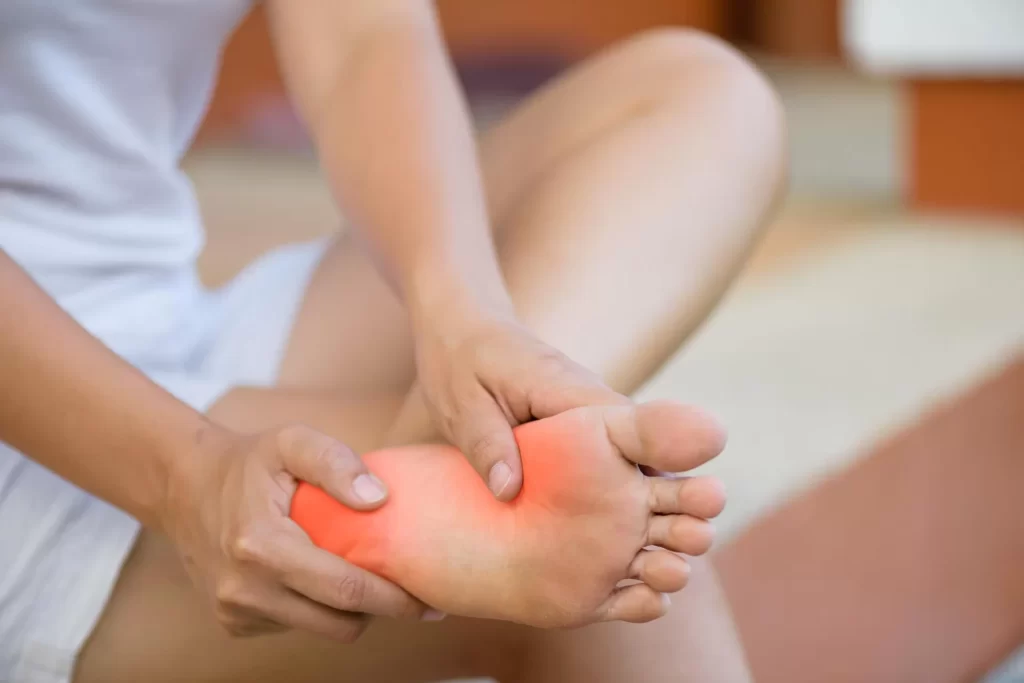
Corns & Calluses Treatment in New Canaan, CT
Corns and calluses are among the most common foot complaints seen by podiatrists. While they are the body’s natural response to repeated friction and pressure, they can become painful, limit your activity, and — especially in patients with diabetes or poor circulation — develop into serious wounds if left untreated.
At New Canaan Podiatry in New Canaan, CT , Dr. Jennifer Tauber, DPM, provides safe, effective in-office treatment for corns and calluses, along with the guidance needed to prevent them from returning. Call (203) 548-7688 or request an appointment online today.
Book OnlineWhat Are Corns and Calluses?
Both corns and calluses are areas of thickened, hardened skin that develop in response to repeated friction, pressure, or irritation. They are the skin’s defensive mechanism — building up a toughened layer to protect the underlying tissue from mechanical damage. While they share this basic characteristic, corns and calluses have distinct features.
Calluses are broad areas of thickened skin that typically develop on the sole of the foot, particularly under the ball of the foot (metatarsal heads) and at the heel. They are generally flat or slightly raised, may be yellowed or gray, and are often painless — though large or deep calluses can cause aching discomfort with prolonged standing or walking.
Corns are smaller, more localized thickenings with a dense, hard central core that points inward into the tissue. Corns typically develop on or between the toes where bones press against shoe material or adjacent toes. Hard corns appear on the tops or outer sides of toes; soft corns develop between the toes in areas where moisture keeps them pliable.
What Causes Corns and Calluses?
- Wearing shoes that are too tight, too narrow, or have rigid seams that press against the toes
- Walking without socks or in poorly cushioned footwear
- Biomechanical abnormalities such as bunions, hammertoes, or flat feet that create abnormal pressure distribution
- Bony prominences on the foot that press against shoe material
- Repetitive friction from athletic activity or certain occupations
- Walking barefoot on hard surfaces regularly
Treatment Options for Corns and Calluses
While over-the-counter corn pads and salicylic acid products are widely available, they are not appropriate for all patients and should never be used by patients with diabetes, peripheral neuropathy, or peripheral vascular disease, as they can cause skin breakdown and serious wounds.
At New Canaan Podiatry, Dr. Tauber offers professional, safe treatment including:
- Debridement — precise removal of callus and corn tissue with a scalpel, providing immediate pain relief without damaging healthy surrounding skin
- Padding and offloading devices — custom or semi-custom pads to redistribute pressure away from problem areas
- Custom orthotics — to address the underlying biomechanical causes of abnormal pressure distribution, preventing recurrence
- Footwear modification guidance — recommendations for appropriate shoe types and fitting to eliminate the pressure causing the corn or callus
- Protective toe sleeves and separators for inter-digital corns
For patients with recurrent calluses driven by an underlying structural problem such as a prominent metatarsal head, Dr. Tauber may recommend additional services aimed at addressing the root cause rather than repeatedly treating the symptom.
A Special Note for Diabetic Patients
Patients with diabetes should never attempt to self-treat corns or calluses at home. The skin beneath a callus is thinned and vulnerable to breakdown, and poorly healing wounds can develop rapidly in diabetic patients. Professional debridement and preventive care — including custom diabetic orthotics and appropriate footwear — are essential components of safe foot management for all diabetic patients.
Frequently Asked Questions
What is the difference between a corn and a callus?
A callus is a broad, diffuse area of thickened skin on the sole of the foot. A corn is a smaller, more localized thickening with a hard central core, usually found on or between the toes. Both are caused by friction and pressure, but corns tend to be more painful due to their concentrated core pressing into underlying tissue.
Can I remove a corn at home?
Mild calluses can be carefully managed at home with gentle pumice stone use and moisturizing. However, cutting or “digging out” a corn at home is not safe and can cause bleeding, infection, and worsening of the problem. Patients with diabetes, neuropathy, or vascular disease should never self-treat foot skin conditions and should always see a podiatrist.
Will corns and calluses come back after treatment?
Without addressing the underlying cause — usually abnormal pressure from structural issues or poorly fitting footwear — corns and calluses will typically return after debridement. Custom orthotics, appropriate footwear, and in some cases, treatment of underlying deformities like bunions or hammertoes are important to prevent recurrence.
Are corns and calluses the same as plantar warts?
No. Plantar warts are caused by the HPV virus and have a distinctly different appearance: they interrupt the natural skin lines of the foot, often contain black pinpoint dots (clotted blood vessels), and are more painful with lateral (side-to-side) pressure than direct pressure. Calluses and corns do not disrupt skin lines and are most painful with direct pressure. If you are unsure whether you have a wart or a callus, Dr. Tauber can make a definitive diagnosis during your evaluation.
How often do I need professional callus debridement?
This varies by patient. Some patients benefit from debridement every 6 to 8 weeks, while others with well-controlled biomechanical issues require less frequent treatment. Dr. Tauber will recommend a maintenance schedule appropriate for your specific situation.
Can custom orthotics really prevent corns and calluses?
Yes. Custom orthotics correct the biomechanical abnormalities that cause abnormal pressure distribution across the sole of the foot. By redistributing weight more evenly, orthotics reduce the repetitive friction and pressure that drives callus and corn formation.
Is it normal to have calluses if I exercise regularly?
Athletes and individuals who are very active on their feet often develop calluses as a normal response to repetitive activity. However, calluses should be monitored — if they become thick, cracked, or painful, professional debridement is recommended. Diabetic athletes in particular should have regular podiatric exams to monitor their skin health.