Frequently Asked Questions
At New Canaan Podiatry, we know patients often have questions before a first visit, or when they’re trying to make sense of a new foot or ankle concern. Below are the questions we hear most often. If you don’t see yours answered here, call us at (203) 548-7688 or request an appointment online, we’re always happy to help.
General Questions

What does a podiatrist actually treat?
A podiatrist is a physician who specializes in diagnosing and treating conditions of the feet, ankles, and lower legs. At New Canaan Podiatry, Dr. Jennifer Tauber, DPM, treats a wide range of conditions, from heel pain, plantar fasciitis, bunions, and hammertoes to nail fungus, diabetic foot care, peripheral neuropathy, sports injuries, tendonitis, and plantar warts, among many others.
Do I need a referral to see a podiatrist?
In most cases, no. Some insurance plans do require a specialist referral, though, so it’s worth checking with your provider before your visit to avoid any surprises.
What should I bring to my first appointment?
Your insurance card, a valid photo ID, a list of current medications and supplements, and any relevant medical records or imaging related to your concern. It also helps to bring the shoes you wear most often, so Dr. Tauber can assess their fit and support.
Does New Canaan Podiatry treat patients of all ages?
Yes. We see everyone from children with developing conditions like flat feet and plantar warts to seniors managing chronic issues like diabetic foot disease or arthritis. Dr. Tauber tailors her approach to each patient’s age, health status, and individual needs.
What insurance plans do you accept?
We accept most major insurance plans, including PPO and indemnity plans. Visit our Insurance page or call (203) 548-7688 for specifics before scheduling.
How do I schedule an appointment?
Call us at (203) 548-7688 during regular business hours, or request an appointment online. We welcome new patients and are happy to answer any questions before your visit.
How do I know if I need custom orthotics?
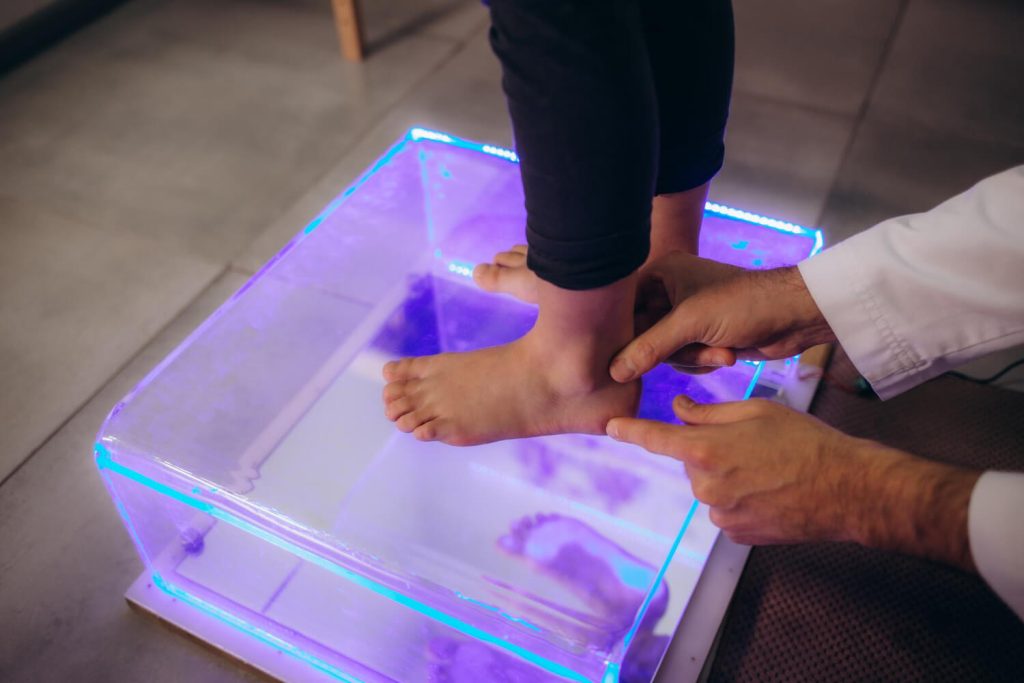
You may benefit from custom orthotics if you’re dealing with chronic foot, ankle, or lower leg pain, have been diagnosed with flat feet, high arches, or a biomechanical irregularity, or if conservative treatments like stretching and over-the-counter insoles haven’t given you enough relief. Dr. Tauber evaluates your gait and foot structure directly and only recommends orthotics when they’re clinically appropriate.
What's the difference between custom orthotics and store-bought insoles?
Store-bought insoles are mass-produced to fit an average foot shape and offer general cushioning. Custom orthotics are fabricated from a mold or digital scan of your individual foot, providing support tailored precisely to your own biomechanics. For patients with real structural issues or chronic pain, that precision translates to significantly better correction and longer-term benefit.
Custom Orthotics

Treatments & Technology
What is MLS Laser Therapy?
An FDA-cleared, non-invasive treatment using synchronized dual-wavelength laser energy to reduce inflammation and stimulate healing. Read more on our MLS Laser Therapy page.
What is EPAT Shockwave Therapy?
An FDA-cleared shockwave treatment that uses acoustic pressure waves to stimulate your body’s own healing response, often used for chronic conditions like plantar fasciitis and Achilles tendonitis that haven’t responded to more conservative care. Read more on our EPAT page.
Does New Canaan Podiatry offer cosmetic services?
Yes. Alongside medical podiatric care, we offer laser vein removal, spider vein treatment, and laser hair removal using the Fotona laser platform, as well as medical pedicure services performed in a sterile, clinically supervised setting.
What is a medical pedicure?
A medical pedicure is a clinical-grade foot care service performed by trained podiatric staff in a medically supervised, sterile environment. Unlike a standard salon pedicure, it addresses nail care, callus removal, and skin health using medical-grade tools and protocols, which makes it especially appropriate for patients with diabetes, neuropathy, or a compromised immune system.
How does diabetes affect the feet?
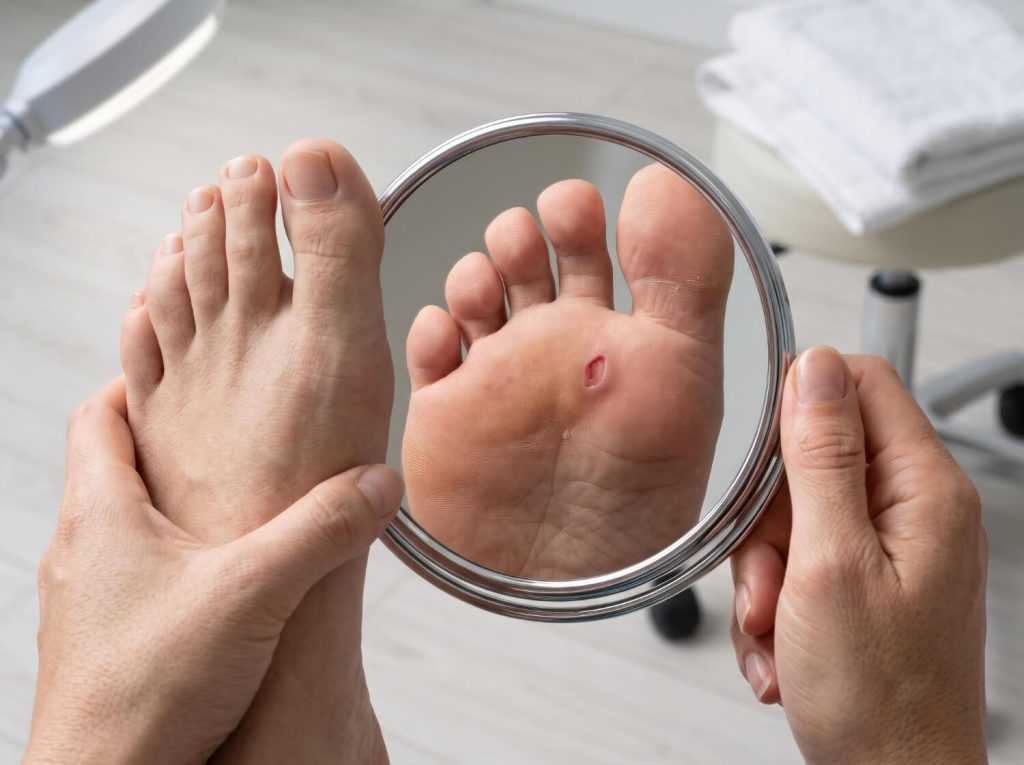
Diabetes can cause two serious complications: peripheral neuropathy, nerve damage that reduces sensation, and peripheral artery disease, reduced blood flow to the lower extremities. Together, they mean small wounds or pressure sores can go unnoticed and fail to heal properly, raising the risk of infection, ulceration, and in severe cases, amputation. Read more on our diabetic foot care page.
How often should diabetic patients see a podiatrist?
Most diabetic patients should have a comprehensive foot exam at least once a year, more often, typically every 1 to 3 months, if neuropathy, peripheral artery disease, a history of foot ulcers, or other high-risk factors are already part of the picture.
What is Charcot foot?
Charcot foot is a serious condition where weakened bones fracture and the foot’s structure gradually collapses, driven by the combined effects of diabetic neuropathy and compromised circulation. Because sensation is reduced, patients can keep walking on the affected foot without realizing fractures are occurring, which leads to significant deformity over time. Early diagnosis and prompt treatment, typically immobilization with a total contact cast, is critical to preventing permanent disability.
Diabetic Foot Care
Common Conditions

What is plantar fasciitis, and how is it treated?
Plantar fasciitis is inflammation of the plantar fascia, the thick band of tissue running along the bottom of the foot, and it’s the leading cause of heel pain in adults. Treatment ranges from stretching, custom orthotics, night splints, and anti-inflammatory medication to corticosteroid injections, MLS Laser Therapy, EPAT Shockwave Therapy, and in rare cases, surgery. Read more on our plantar fasciitis page.
How can I tell if I have a bunion?
A bunion shows up as a bony bump at the base of the big toe, often with redness, swelling, and tenderness. The big toe may angle toward the second toe, and shoes can become harder to fit comfortably. If you’re noticing these signs, it’s worth scheduling an evaluation before it progresses further. Read more on our bunions & hammertoes page.
Can I still walk normally with a hammertoe?
In the early stages, usually yes, a hammertoe may cause only minor discomfort. As it progresses, it can bring real pain, corns, calluses, and trouble finding comfortable shoes. Without treatment, hammertoes tend to become more rigid and severe, which is exactly why early evaluation matters, conservative treatment works best while the toe is still flexible.