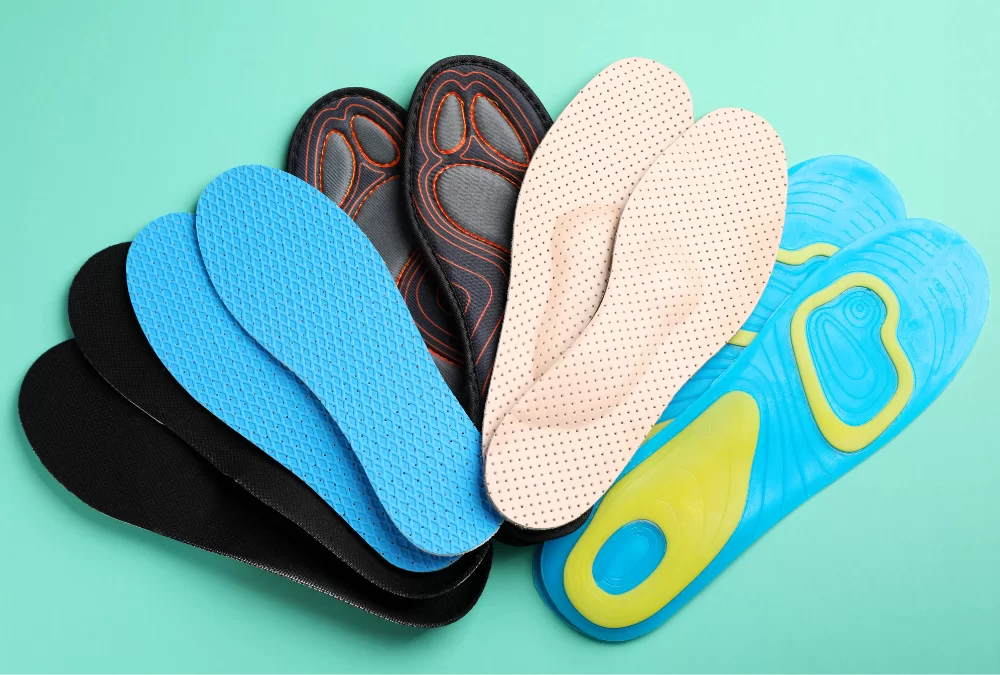
Walk into any pharmacy or sporting goods store and you will find an entire wall of insole products — gel cushions, arch support pads, motion control inserts, and everything in between. With price tags ranging from $10 to $60, they are an attractive first step for anyone dealing with foot pain. But for many patients, these over-the-counter options provide only temporary, incomplete relief — or none at all. So what is the real difference between a store-bought insole and a custom orthotic prescribed by a podiatrist?
What Are Store-Bought Insoles?
Over-the-counter insoles are mass-produced products designed to fit a broad range of foot shapes within a general size range. They are typically made with generic cushioning materials — memory foam, gel, or EVA foam — and may include a pre-formed arch shape designed for an “average” foot.
For someone who simply wants a bit more cushioning during a long day on their feet or for light recreational activity, a quality over-the-counter insole may provide adequate short-term comfort. However, these products are not designed or manufactured to address specific structural or biomechanical problems. They cannot be adjusted or calibrated to your unique foot mechanics, and they offer no correction for conditions that require targeted biomechanical intervention.
What Are Custom Orthotics?
Custom orthotics are prescription medical devices fabricated specifically for your individual foot based on a detailed clinical assessment and a precise impression or 3D scan of your foot. The fabrication process accounts for the exact contours, arch height, pressure distribution, gait mechanics, and specific pathological findings that are unique to your feet.
Custom orthotics are made from medical-grade materials that are selected based on your specific needs — firm polypropylene for maximum correction and control, semi-rigid materials for a balance of support and cushioning, or soft accommodative materials for patients who require pressure redistribution rather than biomechanical correction (most commonly diabetic patients or those with severe neuropathy or ulcer risk).
When Is a Custom Orthotic the Right Choice?
Custom orthotics are the appropriate intervention when a patient has a specific structural or biomechanical issue that is contributing to foot, ankle, knee, hip, or lower back pain. Conditions that routinely benefit from custom orthotic therapy include:
- Plantar fasciitis — custom orthotics provide precise arch support and heel cushioning that reduces fascial tension with every step, addressing the biomechanical root cause rather than just cushioning the symptom
- Flat feet (overpronation) — custom orthotics correct the inward rolling of the foot that places excessive stress on tendons, ligaments, and joints
- High arches (supination) — custom orthotics provide the lateral support and shock absorption that a rigid, high-arched foot cannot generate on its own
- Bunions and hammertoes — orthotics can slow the progression of these deformities by correcting the biomechanical forces that cause them
- Achilles tendonitis and posterior tibial tendonitis — by correcting the gait mechanics that overload specific tendons, orthotics reduce pain and the risk of tendon rupture
- Diabetic foot care — accommodative orthotics redistribute plantar pressure away from vulnerable areas, dramatically reducing the risk of ulceration
- Sports injuries and performance optimization — custom orthotics improve biomechanical efficiency and reduce the repetitive stress that leads to overuse injuries
Can I Skip Custom Orthotics and Just Use Store-Bought Insoles?
For mild, non-structural foot fatigue, a quality over-the-counter insole may be sufficient. However, if you have been dealing with persistent foot or ankle pain, if a previous diagnosis involves a structural abnormality, or if you have already tried insoles without meaningful improvement, a professional evaluation is the appropriate next step.
A podiatrist can assess whether your symptoms have a biomechanical cause and determine whether custom orthotics — or another intervention such as physical therapy, laser therapy, or injections — will deliver the relief you need. Continuing to rely on over-the-counter products when custom orthotics are clinically indicated often means prolonging pain and allowing the underlying problem to worsen over time.
How Long Do Custom Orthotics Last?
With proper care, custom orthotics typically last 2 to 5 years, depending on the materials used and the patient’s activity level. Many patients use their orthotics daily in multiple pairs of shoes, so durability is an important practical consideration. Unlike over-the-counter insoles, custom orthotics can often be refurbished or modified as your needs change, extending their useful life and value.
Getting Custom Orthotics at New Canaan Podiatry
At New Canaan Podiatry, Dr. Jennifer Tauber, DPM, provides comprehensive biomechanical evaluations and prescribes custom orthotics tailored to your specific foot structure, diagnosis, and lifestyle needs. Whether you are an athlete looking to improve performance, a diabetic patient requiring protective pressure distribution, or someone dealing with chronic heel or arch pain, Dr. Tauber will design an orthotic solution that delivers real, lasting results.
Call us at (203) 548-7688 or request an appointment online.
Authoritative Resources: